I have truly appreciated the homeschool curriculum we’ve used because it is Christ-centered and consistently encourages thoughtful reflection, research, and personal growth. For an assignment near the end of the semester, we were asked to write and deliver a speech on a reality that is not often discussed, along with a proposed solution. I chose to research assisted suicide, and the experience was deeply eye-opening. I was struck by what I see as one of the final stages in the devaluation of human life, driven by the gradual removal of Christ from everyday society. What follows is the speech I wrote as I worked through these ideas.
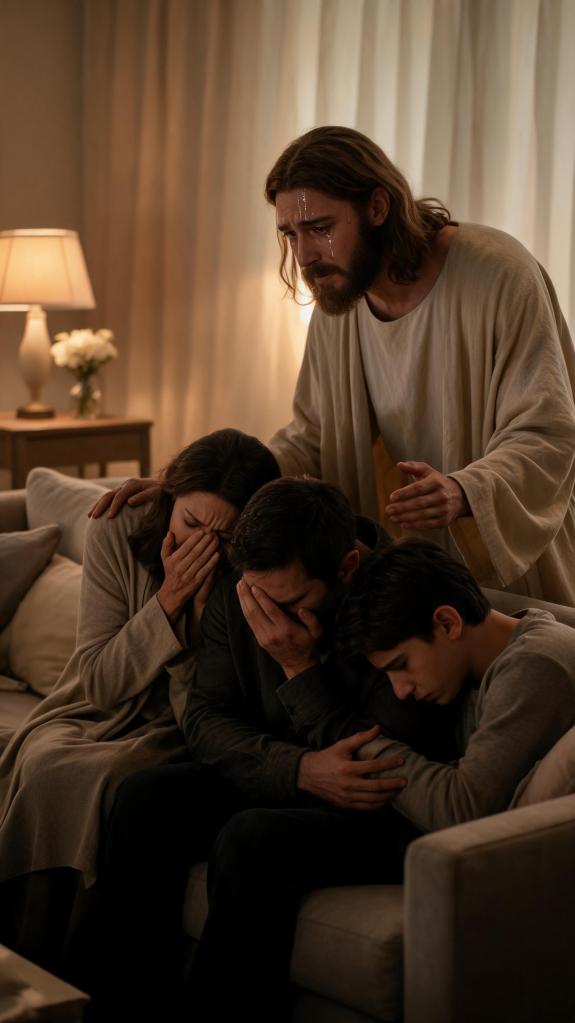
Picture this: your health has been in an active state of decline, and in a moment of weakness, you say to your family, “Maybe medical assistance in dying is the answer.”
The next day, you change your mind. You say, “No—that’s not what I want.”
And yet, hours later, you’re dead—because someone else pushed the process forward.
That is not compassion.
That is coercion dressed up as care.
From a Christian perspective, human life is sacred because it comes from God. We are not the owners of life. And because of that, true compassion does not mean helping someone die—it means helping them live with dignity, comfort, and real support.
When we talk about assisted suicide, we are not just talking about “choice.” We are talking about who has the authority to end a life that God created and sustains.
Let’s define a couple of terms. Physician-assisted suicide, or PAS, is when a doctor prescribes lethal drugs for a patient to self-administer. Euthanasia is when a doctor directly administers the drug. While euthanasia is illegal in the United States, both practices share the same core reality: intentionally ending a human life rather than caring for it until natural death.
We often hear people say, “They were in agony—they couldn’t go on with life.” But that reflects something deeper happening in our culture. As faith declines, so does our sense of meaning in suffering. Scripture teaches that every person—especially the weak, the sick, and the suffering—bears the image of God. A life does not lose its value because it becomes difficult.
Now, there is a pattern we cannot ignore. Those who choose assisted dying are far less likely to be actively engaged in their faith. At the same time, depression and loneliness are rising across our country. Over the past decade, depression rates have climbed 60%, while deaths from physician-assisted suicide have increased nearly 1000%.
That does not prove a simple cause-and-effect relationship. But it should concern us that in a time of growing despair, our culture is increasingly offering death as a “solution” instead of deeper care.
Even the medical profession historically recognized this danger. The Hippocratic Oath warned physicians against the administration of poison and to not attempt to “play at God.” The role of a doctor is to heal, to protect, and to care—not to intentionally end life.
Today, medical ethics often emphasize autonomy and compassion. But in reality, assisted suicide can undermine both. Patients can feel subtle but powerful pressure—from financial strain, fear of being a burden, or from exhausted caregivers. And when that happens, “choice” is no longer truly free.
We are already seeing troubling examples. In Canada, reports have described patients who expressed hesitation or even changed their minds, yet still received assisted death. Others have been approved despite non-terminal conditions or significant mental health struggles.
And we have seen this pattern before. In the 1990s, Dr. Jack Kevorkian assisted in over 100 suicides. Many of those patients were not terminally ill. Some were facing chronic conditions, disability, or fear of losing independence. The reasons were often not just physical pain, but emotional suffering—and the fear of being a burden.
Once the line is crossed, it becomes easier to move it again.
And that is the deeper danger. What begins as an option for extreme cases can gradually expand—until the most vulnerable are the ones most at risk.
This is not just a policy debate. These are real people—neighbors, parents, sons and daughters—who need care, not elimination.
The Christian response is not to ignore suffering, but to meet it with deeper compassion. Hospice and palliative care can effectively manage pain and provide dignity at the end of life. Families, churches, and communities can offer presence, prayer, and support so that no one feels alone or unwanted.
We remind those who are suffering that they are not burdens—they are loved.
True compassion does not say, “Your life is not worth living.”
True compassion says, “Your life is a gift from God, and we will walk with you, care for you, and love you—all the way home.”
That is dignity.
That is mercy.
And that is real compassion.
Physician-Assisted Suicide
Final speech
Picture this: in a moment of weakness, you say to your family, “Maybe something like medical assistance in dying is the answer.” The next day you change your mind. You say, “No, that’s not what I want.” And yet, hours later, you’re dead—because someone else pushed the process forward for you. That is not compassion. That is coercion dressed up as care.
From a Christian point of view, human life is sacred because it comes from God. We are not the owners of life, and that means true compassion does not mean helping someone die; it means helping them live—with dignity, comfort, and real support.
When we talk about assisted suicide, we are not just talking about “choices,” we are talking about who has the right to end a life that God created and sustains.
We hear people say, “Well, they were in agony and couldn’t take life anymore.” But this is exactly what happens when a culture turns away from the Creator who has a purpose for our lives, even in our weakness, even in our suffering. Christians are called to see every person, especially the suffering and vulnerable, as bearing the image of God. It is not our life to take, and it is not the doctor’s life to take either.
Let’s clarify a couple of terms. Physician-assisted suicide, or PAS, is when a doctor prescribes lethal drugs, but the patient self-administers them. Euthanasia, on the other hand, is when the doctor directly administers the drug to cause death, which is illegal in the United States. The language can sound technical, but both practices share one core feature: someone ends a human life on purpose, rather than caring for that life until their natural death.
Interestingly, 60–70% of people who choose assisted dying report some kind of religious affiliation. Yet only a small minority say that religion is highly important in their daily life. In other words, many are Christian culturally or historically, but not actively walking with Christ. A substantial portion identify as having no religion, being secular, or having very low religious engagement. The pattern is clear: lower religiosity—less active faith—is strongly associated with choosing assisted dying.
This should get our attention, because it means that when faith and Christian community are weak, people are much more likely to see death as an acceptable “solution.” Our churches, families, and ministries have a huge role to play in offering real hope and presence long before a person ever reaches that crisis moment.
Over the last decade, two trends have been moving in the wrong direction together. From 2014-2024, the share of Americans age 12 and up with depression rose from 8.2% to 13.1%, about a 60% increase. Over a similar period, Gallup found that the share of U.S. adults who say they currently have or are being treated for depression reached historic highs above 18% in 2024 and 2025. And from 2014 to 2024, documented deaths by physician-assisted suicide in the U.S. increased by nearly 1,000%, while California alone recorded more than 5,000 deaths in less than a decade and more than 1,000 in a single year. That does not prove a simple one-to-one cause, but it should deeply concern us that in a time of rising depression and loneliness, our culture’s answer increasingly includes a medical pathway to an approved, assisted death.
Even the medical profession historically recognized the danger here. The Hippocratic Oath includes language rejecting the administration of poison and warning physicians not to “play at God.” Those principles fit closely with the long-standing ethical duty to heal, protect, and not intentionally kill.
Our modern language talks about four main principles of medical ethics: autonomy, beneficence, non-maleficence, and justice. Yet there are countless cases and testimonies showing that physician-assisted suicide actually conflicts with each one of those principles. It undermines autonomy through subtle pressure, it harms instead of heals, and it exposes the weakest to the greatest risk.
As of 2026, physician-assisted suicide is legal in 13 U.S. jurisdictions: Oregon, Washington, Montana, Vermont, California, Colorado, Hawaii, New Jersey, Maine, New Mexico, Delaware, Illinois, and Washington, D.C. In many of these places, state reporting remains thin or inconsistent, and critics argue that meaningful transparency has not materialized.
The first legal case of physician-assisted suicide in the U.S. happened on April 4, 1998, in Oregon. The patient was an 85-year-old woman with metastatic breast cancer who took barbiturates with brandy and died at home about 30 minutes later. Public reporting on that first death was sparse, and the woman’s identity was not widely preserved in the public record.
Since 1997, at least 14,446 Americans have died by physician-assisted suicide according to a recent compiled database, and critics argue the true number may be higher because reporting is uneven across the country.
And it is not just terminal cancer patients. Compiled reporting from advocacy groups claims that some people with conditions such as lupus, complications from falls, anorexia, diabetes, and other less typical diagnoses have been approved under assisted-suicide laws or protocols.
Worse yet, enforcement and reporting are often criticized as lax. Some states have released little or no annual data, and others provide only limited summaries. In practice, critics argue this creates weak accountability and greater risk for vulnerable patients.
The story of Dr. Jack Kevorkian also shows how quickly boundaries can erode. Kevorkian assisted more than 100 suicides in the 1990s (before PAS was legal). Analyses of his cases found many patients were women and some had chronic or non-terminal illnesses, with common reasons including disability, pain, and fear of burdening others. That pattern should be alarming to anyone.
Canada gives us a sobering picture of where this can go. Reporting on the case known as “Mrs. B” describes an elderly woman recovering from heart surgery who expressed interest in MAID, then said the next day that her personal and religious beliefs led her to choose palliative care instead; after further pressure from her exhausted husband, she nonetheless received MAID that same day. Reports on Kiano Vafaeian describe a 26-year-old man with diabetes, partial blindness, and depression whose family says he was approved for MAID despite signs of improvement and their clear objections.
“In countries that have legalized euthanasia and tied it closely to organ procurement, we are already seeing deeply disturbing cases. In Spain, a 25‑year‑old woman named Noelia Castillo, traumatized by a violent assault and left disabled after a suicide attempt, was approved for euthanasia even though her father fought in court to save her. At first she agreed to donate her organs, and medical staff welcomed the chance to harvest healthy organs from a young woman, but days before her scheduled death she reportedly changed her mind about donation, despite what her family’s lawyers describe as intense pressure from the hospital. Her father’s legal team now argues that the hospital pushed ahead with euthanasia because her organs were ‘at risk,’ showing how quickly a suffering young woman can be treated less as a patient to be protected and more as a collection of spare parts.”
These are not just abstract policy debates. They are warnings about what happens when suffering people are treated as problems to solve rather than neighbors to love.
Biblically, the response is not to ignore suffering, but to meet it with deeper compassion. Hospice and palliative care can be expanded so pain and symptoms are truly managed. Spiritual counseling, prayer, family support, and faithful presence can remind people that they are not burdens, but beloved human beings made in the image of God.
The focus should be comfort, dignity, and natural death in God’s timing—not assisted death in ours. True compassion does not say, “Your life is not worth living.” True compassion says, “Your life is a gift from God, and we will stay with you, love you, and care for you, all the way home.”


Leave a Reply