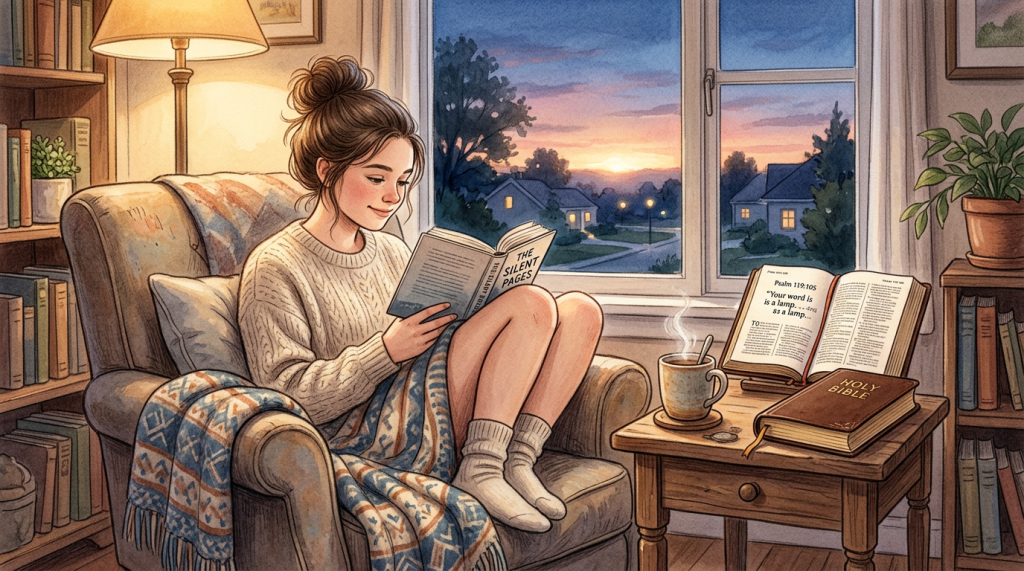
“No two persons ever read the same book.” – Edmund Wilson
My mom told me that when I was a little kid, if she couldn’t find me, I was usually off reading a book somewhere. As she tells it, my dad was worried I would become a big nerd. So, she didn’t directly push my learning to read; we just read a lot, and I had free access to a multitude of children’s books.
When I was between two and three, someone asked her if she would like some phonics cards, which she gladly accepted. That week, she found me going through them and teaching myself phonics! Thus, you can see, my love for reading started young—or rather, my love for knowledge. I used to read the same fairytale books repeatedly, just to make sure I hadn’t missed anything. I read them so many times I could practically recite them. Yet somehow, every time I picked one up again, the story felt a little different. Even though the words hadn’t changed, I had—and that made all the difference.
Over the last couple of years, I’ve come to understand what Edmund Wilson meant when he said, “No two persons ever read the same book.” It’s such a simple statement, yet it captures the entire mystery of why stories matter. Two people—or even one person at different times—can turn the same pages and read the same sentences, but their hearts will not receive those words in the same way. Each reader carries their own memories, emotions, and worldview—filters that color how they understand the author’s message.
That’s the beauty of a well-written piece of literature: it was never meant to be confined to a single interpretation. When someone writes, they are, in a sense, sharing a piece of their soul with the world. They send their thoughts and emotions out into the unknown, trusting that others will find meaning in them—whatever that meaning may be.
A collection of words on a page is meaningless without an individual to give them purpose. It’s the reader who breathes life into the story, transforming sentences into feelings and ideas; because no two people are exactly alike, no two readings can ever be the same. Every book becomes an ongoing conversation between the author and the reader; every person writes their own version in their heart.
All great stories change us in some way—but one Story, the greatest of all, transforms us completely. I believe my love for reading and seeking knowledge is one of the main things that helped lead me to Christ. Yes, I was exposed to Jesus early on—taken to church, read Bible stories, and surrounded by faith—but when I started reading Scripture for myself, even in my “Kid’s Bible,” something changed. I became deeply intrigued by the man called Jesus and the miracles He performed, and that curiosity turned into a desire to truly know Him.
Perhaps the fact that the Author of The Book is also the Author of Creation makes it so that every time I read Scripture, it meets me where I am, as I am. The most amazing thing is that it does the same for anyone who opens the pages of the Living Word—if they allow themselves to be changed.
You can grow up surrounded by Christians, go to church every Sunday and class every Wednesday, and still not know God for who He is. But through reading Scripture on my own and letting God guide my heart, I stopped trying so hard at religion and found my relationship with the Lord. I finally realized that I had a Father and a Friend looking out for me, and that changed my whole perspective on how I wanted to live.
Just as no two people ever read the same book, no two people encounter God’s Word in the same way—and that’s the wonder of it. The Author meets each of us personally, right on the page.
I encourage you this week, to set aside a few quiet minutes, read a passage of Scripture on your own, and really absorb the words you’re reading – as you would a good book; for you are reading the most divine book of all. Ask the Lord to meet you “on the page,” and pay close attention to what gently tugs at your heart as you read.
 Faith & Freedom
Leave a comment