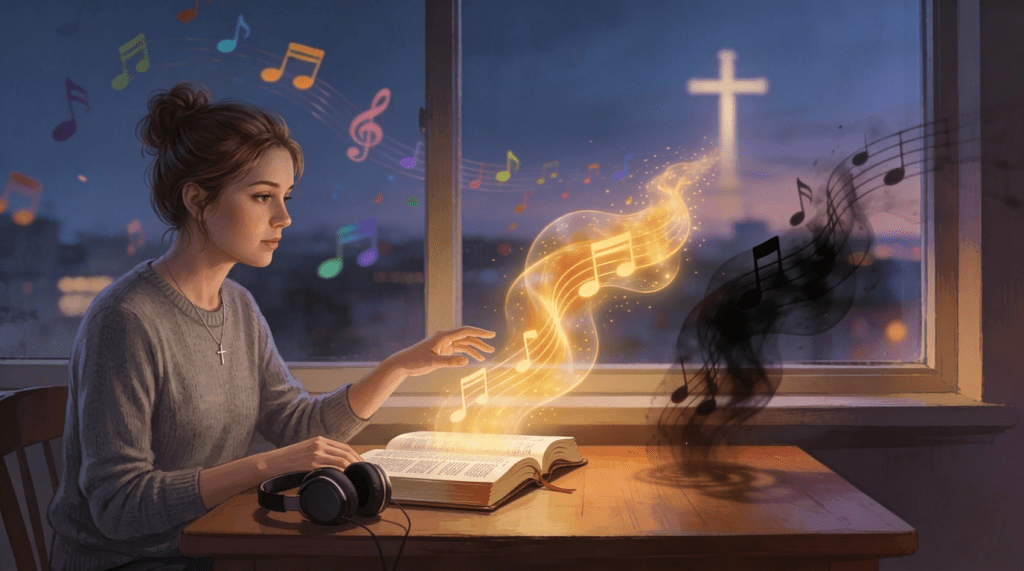
Why I Research the Christian Artists I Listen To
Music has always been one of the most powerful ways I worship and draw closer to God. But over time, I’ve learned that not every song labeled “Christian” necessarily points people toward biblical truth. That realization began a journey of discernment—one that now shapes how I choose the artists and songs I listen to.
It started a few years ago when I came across an interview with a Christian artist I admired, Lauren Daigle. She was asked whether homosexuality is a sin, and her response—“I don’t know, I’m not God”—deeply surprised me. I’m not judging her relationship with Jesus; that’s between her and the Lord. But it made me realize this was about more than one person’s opinion. God calls His people, especially those in visible leadership, to speak clearly about what He has already revealed in His Word. Through Scripture, I knew this answer did not reflect the biblical response a spiritual leader is called to provide.
The Biblical Call to Spiritual Example
Scripture sets a high standard for every kind of spiritual leader—pastor, teacher, or musician:
- “Be examples to the flock.” (1 Peter 5:3)
- “Be imitators of me, as I am of Christ.” (1 Corinthians 11:1)
- “Set the believers an example in speech, in conduct, in love, in faith, in purity.” (1 Timothy 4:12)
High‑profile Christian artists influence thousands—sometimes millions—of listeners. People inevitably imitate them, whether they intend for that to happen or not. That’s why character and theology matter just as much as talent. When someone sings about Jesus, their life offstage should reflect a genuine pursuit of Him. Sadly, there are countless musicians, pastors, and church leaders who have strayed from truth, abandoned their faith, and embraced sin—to the great harm of the Church.
The Role of Musicians in Scripture
Even in the Old Testament, musicians weren’t casual entertainers; they were ministers. In 1 Chronicles 25, King David appointed trained musicians to serve before the Lord and “proclaim His messages.” Later, in 2 Chronicles 5, the singers and trumpeters worshiped with such unity and sincerity that “the glory of the Lord filled the temple.”
Those verses remind me that worship music carries real spiritual weight. The people leading songs—whether in church or online—shape how others approach God in worship. It’s a sacred responsibility, not just a career. Any time someone stands before an audience, even on a small church stage, they’re holding themselves out as a spiritual example and encourager in the faith.
Why I Research Artists Before I Listen
After that initial interview, I continued learning more about Lauren Daigle and was disappointed by her reluctance to speak clearly about biblical principles, such as the sanctity of life. As someone who is firmly pro‑life, her avoidance of these truths troubled me. Please know my heart—I strive to love everyone. We’re all sinners, but we must hold fast to God’s truth and pursue holiness.
Because of this experience, when I find a new Christian song, I take time to learn about the artist—what they believe, how they live, and whether their lyrics align with Scripture. If I can’t find much information, I focus on the words themselves: Do they reflect biblical truth? Do they glorify God or merely stir emotion?
This practice doesn’t come from judgment but from a desire to guard my heart and honor the Lord in what I listen to. Philippians 4:8 calls believers to dwell on what is true, honorable, and praiseworthy.
Sometimes, this even leads to family discussions. I’ll ask my dad if he’s ever noticed the lyrics of a song he likes—he usually mentions how much he enjoys the rhythm. I will have him truly pay attention to the words, usually causing his perspective to change about the songs he listens to.
Every Christian artist has their own walk with God, and I pray for them on their journey—but I also want my playlist to strengthen my faith, not confuse it.
“For God is not the author of confusion, but of peace, as in all churches of the saints.” — 1 Corinthians 14:33 (KJV)
What started it all – Lauren Daigle Doesn’t Know If Homosexuality Is A Sin
When the Song Does More Than Set the Mood
I’m sure you’ve felt it: one song comes on, and your foot starts tapping. You catch yourself humming along, emotions rise, memories flood back, and suddenly your heart feels lifted. This is no accident—God designed music to reach places in us that nothing else can. Modern research simply confirms what Scripture shows—that what we sing sinks deeply into our hearts and minds.
That’s why worship teams must be intentional about what they share. It’s never “just music.” Worship songs teach, shape, and reinforce what we believe about God, ourselves, and the world.
How Music Reaches the Heart
Brain studies show that when we listen to music, multiple regions “light up” at once—those tied to emotion, reward, memory, and identity. No wonder my parents experience such nostalgia when a certain song comes on, or we watch an older movie. Music is stitched into our emotional and spiritual story.
Researchers talk about musicking—not just listening, but engaging with music—as a way people shape their mood and mindset. We don’t only listen to music because we feel a certain way; we often choose music to become a certain way.
Music and the Beliefs We Carry Away
Studies show that over time, people begin to adopt beliefs consistent with the messages in the songs they listen to the most. When certain ideas about love, identity, or success are repeated, they start to feel normal—even true. The same principle applies to worship music. If our songs contain unbiblical messages, they can distort our understanding of Christ rather than deepen it.
Repetition shapes belief—and music, more than we realize, disciples us.
Precautions for Young Listeners
Young people, especially, are still forming their convictions, identity and worldview. Discernment is absolutely vital in every area of input—especially music.
- Repetition disciples you. The songs you replay are quietly teaching you what to love, chase, and expect from life.
- Watch the mix of message and mood. Just because a song feels uplifting doesn’t mean its message is biblically sound.
- Silence is okay. Don’t let music drown out God’s voice; He often speaks in stillness.
- Pay attention to who is glorified. Does the song center on Christ or on self?
- Remember artists are influencers, not just entertainers. Their values often shape our own more than we realize.
- Invite older believers into your playlist. Let a parent, mentor, or pastor review what you’re listening to—you might be surprised what they notice.
A simple challenge:
Take ten minutes this week to scroll through your playlist, pray over it, and ask God,
“Lord, is there anything here that’s quietly pulling my heart away from You?”
 Faith & Freedom
Leave a comment